
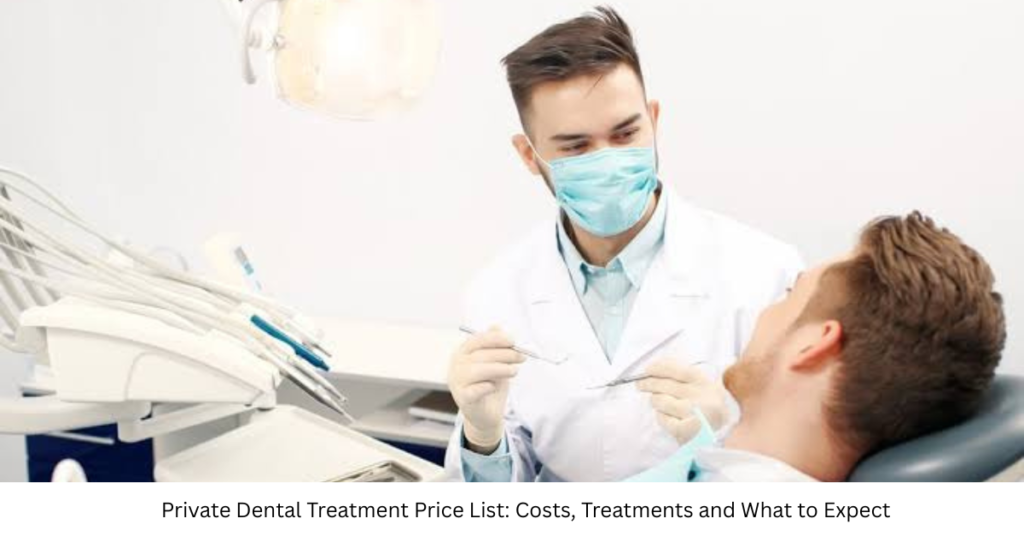

A dental appointment can be difficult enough without wondering whether the bill will come as a surprise. If you’re considering private care, understanding a private dental treatment price list before booking can make the whole process much easier.
Private dental fees vary considerably depending on the dentist, location, treatment complexity and materials used. A routine examination may be relatively affordable, while treatments such as dental implants, veneers or orthodontics can cost considerably more.
This guide explains typical private dental costs, what different treatments involve, why prices vary, and what questions to ask before agreeing to treatment.
What Is Included in a Private Dental Treatment Price List?
A dental price list is essentially a guide to the fees a practice charges for different services. It may include routine preventive care, restorative dentistry, cosmetic procedures and more complex treatments.
A typical fee guide may cover:
- New-patient examinations
- Routine dental check-ups
- Hygienist appointments
- X-rays
- Dental fillings
- Tooth extractions
- Root canal treatment
- Crowns and bridges
- Dentures
- Dental implants
- Teeth whitening
- Veneers
- Orthodontic treatment
- Emergency dental appointments
It’s worth remembering that a listed price is not always the final amount you will pay. Your dentist may need to examine your teeth first before providing an accurate treatment estimate.
Typical Private Dental Treatment Prices
The following figures are general UK price ranges, rather than fixed national fees. Individual practices can charge more or less depending on their location, expertise, materials and treatment complexity.
| Treatment | Typical Private Price Range |
|---|---|
| Dental examination | £40–£100 |
| New-patient examination | £60–£150 |
| Hygienist appointment | £60–£150 |
| Dental X-ray | £10–£40 per image |
| White filling | £100–£300 |
| Tooth extraction | £100–£300+ |
| Root canal treatment | £400–£1,200+ |
| Dental crown | £500–£1,200+ |
| Dental bridge | £700–£2,000+ |
| Denture | £600–£2,000+ |
| Dental implant | £2,000–£4,000+ |
| Teeth whitening | £250–£700 |
| Porcelain veneer | £600–£1,200+ |
| Orthodontic treatment | £2,000–£6,000+ |
These figures should be treated as a budgeting guide rather than a quotation. Some procedures may also involve additional diagnostic scans, laboratory fees, temporary restorations or follow-up appointments.
How Much Does a Private Dental Check-Up Cost?
A routine private dental examination commonly costs around £40 to £100, although fees can be higher in some practices.
The appointment usually involves an examination of your teeth, gums and mouth. Depending on your circumstances, the dentist may recommend X-rays to identify problems that cannot be seen during a visual examination.
Some practices offer different examination prices for new and existing patients, so check the practice’s fee guide before making an appointment.
Are X-rays Included?
Not necessarily. Some practices include certain X-rays within the examination fee, while others charge separately.
If you’re comparing dentists, ask whether diagnostic X-rays, photographs or other assessments are included in the quoted examination price.
Private Hygienist Costs
Professional cleaning is another common item on a dental fee schedule.
A standard hygienist appointment may cost approximately £60–£150. The exact price can depend on how much cleaning is required and whether the practice uses conventional scaling or more advanced periodontal treatments.
Regular professional cleaning can help remove plaque and tartar that are difficult to eliminate with normal brushing and flossing.
Private Dental Filling Prices
The cost of a filling depends on the tooth, size of the cavity and material selected.
For example, a small composite filling may cost around £100–£200, while a larger or more complicated restoration can be considerably more expensive.
Common filling materials include:
- Composite resin
- Glass ionomer
- Amalgam
- Ceramic materials
Tooth-coloured composite fillings are particularly popular because they can blend naturally with the surrounding tooth.
How Much Does a Private Root Canal Cost?
Root canal treatment is generally more expensive than a simple filling because it is a more involved procedure.
Private root canal treatment can range from approximately £400 to more than £1,200, depending on the tooth and complexity.
Molars often cost more because they usually have multiple canals. After root canal treatment, the tooth may also require a crown to provide additional protection, creating another cost to consider.
Dental Crown Prices
A crown is used to restore and protect a heavily damaged or weakened tooth. Private crown prices commonly fall somewhere between £500 and £1,200 or more.
The material can influence the cost. Options may include:
- Porcelain
- Zirconia
- Ceramic
- Porcelain-fused-to-metal
- Metal alloys
Your dentist should explain the advantages, limitations and expected appearance of each option before treatment begins.
Dental Implant Costs
Dental implants are among the more expensive treatments available privately.
A single implant-supported tooth may cost roughly £2,000–£4,000 or more, depending on what is included in the treatment package.
The overall process may involve:
- Initial consultation
- Dental examination
- 3D imaging or scans
- Implant placement
- Healing period
- Abutment placement
- Crown placement
- Follow-up appointments
Additional procedures, such as bone grafting, can increase the total cost.
When comparing implant prices, check whether the advertised figure includes the implant, abutment, crown, scans and follow-up care. A low headline price may not represent the complete treatment cost.
Private Denture Prices
Dentures can be a more affordable alternative to some implant treatments, although prices vary according to the type and quality of denture.
A private denture may cost approximately £600–£2,000 or more.
Common options include:
- Full dentures
- Partial dentures
- Acrylic dentures
- Chrome or metal-based dentures
- Implant-retained dentures
Your dentist can explain which option is appropriate based on the number of missing teeth, your oral health and your budget.
Cosmetic Dentistry Prices
Cosmetic dentistry covers treatments intended primarily to improve the appearance of your smile.
Teeth Whitening
Professional whitening can cost around £250–£700, depending on whether you receive an at-home kit, in-practice treatment or a combination approach.
Dental Veneers
Porcelain veneers commonly cost around £600–£1,200 or more per tooth.
The total price can therefore become substantial if several teeth are treated. Veneers also require careful planning because they are intended to provide a long-term cosmetic solution rather than simply covering a temporary dental problem.
Orthodontic Treatment
Private orthodontic treatment can range from approximately £2,000 to £6,000 or more.
The final price depends on factors such as:
- Type of appliance
- Treatment duration
- Complexity of tooth movement
- Number of appointments
- Retainers
- Refinements
Clear aligners, traditional fixed braces and other orthodontic systems may all have different pricing structures.
Why Do Private Dentist Prices Vary?
Two dental practices can charge very different amounts for what appears to be the same procedure. That doesn’t automatically mean one dentist is overcharging.
Several factors influence dental fees.
Location
Dental practices in major cities and affluent areas often have higher operating costs, which can be reflected in their prices.
Dentist’s Experience
A dentist with advanced training or extensive experience in a particular procedure may charge more for their expertise.
Materials and Laboratory Costs
High-quality crowns, veneers and dentures often involve specialist dental laboratories. The choice of materials can therefore have a significant impact on the final fee.
Technology
Some practices invest heavily in digital scanners, 3D imaging, CAD/CAM technology and other equipment. These technologies can increase costs but may also improve diagnosis, planning and treatment.
Treatment Complexity
A straightforward procedure is usually less expensive than one requiring additional appointments, specialist care or surgical treatment.
How to Compare Private Dental Fees
Don’t simply choose a dentist because they advertise the lowest price.
Instead, compare the total treatment cost and what you receive for that fee.
Before committing to treatment, ask:
- Is the consultation included?
- Are X-rays or scans included?
- Is the laboratory fee included?
- Are temporary restorations included?
- How many appointments are expected?
- Are follow-up visits included?
- What happens if the restoration needs adjustment?
- Is there a written treatment plan?
- Are there alternative treatment options?
- What is the complete estimated cost?
A transparent dentist should be comfortable explaining the proposed treatment and associated fees.
Does Private Dental Treatment Offer Better Quality?
Private dentistry does not automatically mean that every treatment is better simply because it costs more.
Private practices may offer advantages such as greater appointment availability, longer consultations, additional cosmetic options, modern technology or access to particular specialists. However, the quality of treatment depends on the individual dentist, clinical standards, materials and appropriate treatment planning.
Price should therefore be considered alongside qualifications, experience, reputation, communication and the suitability of the proposed treatment.
How to Keep Private Dental Costs Under Control
Dental treatment can become expensive when small problems are allowed to develop into major ones.
A few sensible habits can help reduce future costs:
- Attend regular dental examinations.
- Brush twice daily with fluoride toothpaste.
- Clean between your teeth every day.
- Limit frequent sugary snacks and drinks.
- Don’t ignore tooth sensitivity or persistent pain.
- Follow your dentist’s preventive-care advice.
- Ask about treatment alternatives when appropriate.
- Request a written estimate for major procedures.
Preventive dentistry is often considerably cheaper than treating advanced decay, gum disease or tooth loss.
Are Dental Payment Plans Available?
Many private dental practices offer payment plans or finance options for larger treatments. These can spread the cost over several months rather than requiring the entire amount upfront.
However, always check the terms carefully. Depending on the arrangement, there may be interest, administration charges, eligibility requirements or other conditions.
For expensive treatment, compare the total amount payable, not just the monthly payment.
Private Dental Treatment Price List: What Should You Check?
Before booking treatment, look beyond the headline figure.
A good fee guide should make it reasonably clear:
- What each treatment costs
- Whether prices are starting prices
- Which treatments have variable fees
- Whether consultations are charged separately
- Whether laboratory costs are included
- Whether emergency appointments have different fees
- Whether payment plans are available
If something isn’t clear, contact the practice and ask for clarification before treatment begins.
Frequently Asked Questions
What is the average cost of private dental treatment?
There is no single average because dental treatment ranges from inexpensive examinations and fillings to costly implants and complex restorative work. A basic appointment may cost less than £100, while major restorative treatment can run into several thousand pounds.
Is private dentistry more expensive than NHS dentistry?
In the UK, private dental treatment is generally more expensive because fees are set by individual practices and are not limited to NHS charging bands. However, private dentistry may provide a wider choice of treatments, materials and appointment options.
How much should I budget for a private dentist?
For routine care, budgeting a few hundred pounds per year may be reasonable for some patients, but this can vary significantly. Anyone expecting restorative or cosmetic treatment should request an individual treatment plan rather than relying on general price estimates.
Are dental implants worth the cost?
Dental implants can provide a durable way to replace missing teeth and may offer benefits in terms of function, stability and appearance. Whether they’re appropriate depends on your oral health, bone levels, medical circumstances and personal preferences.
Can I negotiate private dental prices?
Some practices may offer payment plans or package pricing for extensive treatment, but this varies. It is usually more productive to ask about available treatment alternatives and payment options than to negotiate the clinical fee itself.
Why is one dentist much cheaper than another?
Differences can result from location, dentist experience, materials, laboratory costs, technology, treatment complexity and what is included in the quoted price. Always compare like-for-like treatment before deciding.
Can a dentist give an exact price before examining me?
For many treatments, an exact price cannot be confirmed until the dentist has assessed your teeth and oral health. A consultation allows the dentist to determine what treatment is actually required and whether additional procedures are necessary.
Conclusion
Understanding a private dental treatment price list is a useful starting point when budgeting for dental care, but the cheapest advertised fee isn’t necessarily the best value. Examination fees, materials, laboratory charges, scans, follow-up appointments and additional procedures can all affect the final bill.
For routine care, prevention remains one of the most effective ways to control long-term dental expenses. If you need restorative, cosmetic or specialist treatment, ask for a clear written treatment plan and a complete cost estimate before proceeding.
The best approach is to compare the treatment, total price, dentist’s experience and what is included—not just the number printed next to a procedure on a fee guide.