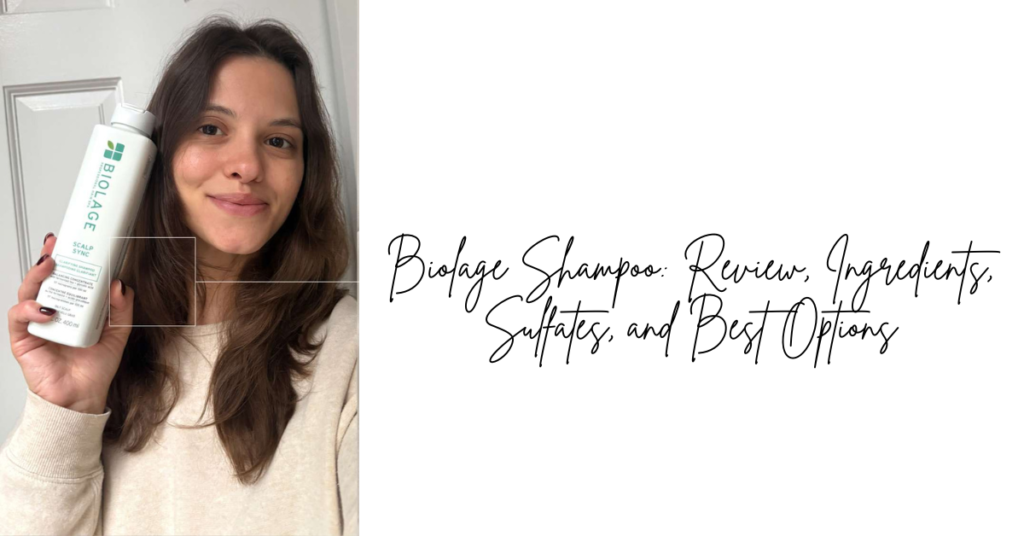

If choosing a shampoo feels like trying to decode a chemistry textbook, you’re not alone. With so many formulas designed for dryness, color-treated hair, scalp concerns, breakage, and thinning-looking hair, finding the right Biolage Shampoo can take a little research.
Biolage is a professional haircare brand known for combining salon-inspired formulas with ingredients such as soybean oil, aloe, hyaluronic acid, squalane, fermented tea, and targeted scalp-care ingredients. The important thing is that there isn’t one universal Biolage formula—different collections are designed for different hair and scalp needs.
So, is Biolage worth buying? Are its shampoos sulfate-free? Which formula is best for damaged, colored, dry, oily, or thinning-looking hair? Let’s take a closer look.
What Is Biolage Shampoo?
Biolage is a professional haircare brand offering shampoos, conditioners, treatments, and styling products for a variety of hair concerns.
Rather than making one shampoo for everyone, Biolage divides its products into collections. Current offerings include Hydra Source, Color Last, Strength Recovery, Full Rescue, and several Scalp Sync formulas.
That variety is one of the brand’s biggest advantages. Someone with dry hair needs a very different cleansing routine from someone dealing with an oily scalp or frequent color treatments.
Why Do People Choose Biolage?
There are a few reasons the brand remains popular:
- Salon-oriented haircare formulas
- Different products for specific hair concerns
- Options for color-treated hair
- Dedicated scalp-care products
- Ingredients selected for hydration, cleansing, conditioning, or strengthening
- Vegan formulas across the current Biolage range
- Cruelty-free certification through the Leaping Bunny program
The biggest takeaway is simple: the collection matters just as much as the brand name.
Is Biolage Shampoo Good?
For many people, yes—but “good” depends on what you expect from a shampoo.
A shampoo should primarily cleanse the scalp and hair. The right formula can also help with concerns such as dryness, buildup, color fading, breakage, or scalp discomfort.
For example, Strength Recovery is aimed at damaged or fragile hair and uses olive squalane and vegan proteins. Biolage says its shampoo-and-conditioner combination produced stronger hair after one use in its consumer testing.
Color Last, meanwhile, is formulated specifically for color-treated hair and uses soybean oil and stearic acid. The brand says the shampoo-and-conditioner system helps prevent color fade for up to four weeks under its testing conditions.
In other words, the better question isn’t simply “Is Biolage good?” It’s which Biolage formula is good for my hair?
Best Biolage Shampoo for Different Hair Types
Choosing by hair concern is generally more useful than choosing by popularity.
1. Color Last Shampoo for Color-Treated Hair
If you’ve invested time and money into coloring your hair, Color Last is one of the most obvious options in the range.
The formula has a low pH and is designed to cleanse while helping reduce color fade. It contains soybean oil and stearic acid, and Biolage says the shampoo and conditioner system can help prevent color fading for up to four weeks.
It can also be used on pre-lightened hair, according to the manufacturer.
2. Strength Recovery for Damaged Hair
Frequent heat styling, bleaching, chemical processing, and mechanical stress can leave hair feeling rough and fragile.
Strength Recovery is specifically designed for damaged or fragile hair. Its formula includes olive squalane and vegan proteins, with the goal of reducing breakage and improving strength and softness.
This is a particularly sensible option if your main complaint is breakage rather than hair loss from the root.
3. Hydra Source for Dry Hair
Hydra Source is designed around hydration and is one of Biolage’s options for dry hair. The collection includes formulas featuring ingredients such as aloe and hyaluronic acid.
If your hair feels rough, dry, or difficult to manage after washing, a moisturizing formula may make more sense than a clarifying shampoo.
4. Scalp Sync for Scalp Concerns
Scalp Sync is different from many traditional shampoos because the collection focuses heavily on scalp care.
There are separate formulas for concerns including dry or sensitive scalp, oily scalp, buildup, and dandruff. The current range includes calming, clarifying, and anti-dandruff shampoos.
For example, the Scalp Sync Clarifying Shampoo is intended for oily scalps and uses glycolic acid and a fermented tea blend. Biolage says it can remove up to 100% of scalp residue in its testing.
Does Biolage Shampoo Have Sulfates?
This is one of the most important questions to ask because Biolage shampoos are not all sulfate-free.
Several current formulas list sulfate cleansing agents in their ingredient lists. For example, Color Last contains sodium laureth sulfate, while the Scalp Sync Anti-Dandruff formula lists both sodium laureth sulfate and sodium lauryl sulfate.
Strength Recovery also currently lists sodium laureth sulfate among its ingredients.
So if you’re specifically searching for a sulfate-free shampoo, don’t assume that every product carrying the Biolage name qualifies. Check the ingredient list of the exact product you’re buying.
Is Biolage Shampoo Sulfate Free?
Not every formula is sulfate-free.
This distinction matters because people sometimes search for “Biolage sulfate free” as though it describes the entire brand. It doesn’t.
Biolage has multiple collections and formulas, and ingredient lists can differ between products and potentially change over time. Always check the current packaging or manufacturer’s product page before purchasing if avoiding sulfates is important to you.
Biolage Shampoo Ingredients: What Should You Look For?
The ingredient list varies considerably depending on the formula.
Some examples include:
- Soybean oil: used in Color Last for nourishment and conditioning.
- Olive squalane: featured in Strength Recovery to help retain moisture and support damaged hair.
- Vegan proteins: used in Strength Recovery to support strength and elasticity.
- Glycolic acid: included in several Scalp Sync products for scalp exfoliation and buildup management.
- Fermented tea: featured in Scalp Sync formulas for scalp-focused care.
- Salicylic acid: present in several formulas, including Scalp Sync products.
Ingredients should always be considered in context. A particular ingredient isn’t automatically “good” or “bad”; what matters is the overall formulation and whether it suits your hair and scalp.
Biolage Shampoo and Conditioner: Should You Use Both?
A shampoo and conditioner serve different purposes.
Shampoo primarily cleanses the scalp and hair, while conditioner helps improve softness, manageability, and the feel of the hair fiber.
Using products from the same collection can make sense because they are formulated as a routine. For example, Biolage positions Color Last Shampoo and Conditioner together for color care, while Strength Recovery combines cleansing with conditioning and repair-focused products.
That doesn’t mean you absolutely have to buy a matching set.
You can mix products based on your needs—for example, a scalp-focused shampoo with a moisturizing conditioner—provided the combination works well for your hair.
Biolage Shampoo and Conditioner Reviews: What Matters?
When reading product reviews, don’t focus only on the star rating.
Look for comments from people who have:
- A similar hair texture.
- Similar scalp concerns.
- Similar color-treatment history.
- Similar washing frequency.
- Similar expectations from the product.
A person with an oily scalp may love a clarifying shampoo but find a rich moisturizing formula too heavy. Someone with chemically damaged hair could have the exact opposite experience.
This is why Biolage shampoo reviews are most useful when you read them as experiences rather than universal verdicts.
Can Biolage Help With Thinning Hair?
Biolage has products aimed at hair that looks thinner or less full. Its current range includes Full Rescue, which the brand describes as helping create stronger, fuller-looking hair and supporting a healthy-looking scalp.
However, it’s important to distinguish hair breakage and cosmetic fullness from medical hair loss.
A shampoo can cleanse the scalp and improve the appearance and condition of the hair, but persistent thinning or shedding can have many causes. If you’re experiencing significant or ongoing hair loss, it’s better to speak with a dermatologist or other qualified healthcare professional rather than relying on shampoo alone.
Does Biolage Shampoo Cause Hair Loss?
There is no good reason to assume that Biolage shampoo generally causes hair loss simply because some users notice shedding while using a product.
Hair shedding can occur for many reasons, and breakage can sometimes be mistaken for hair loss. A shampoo may also irritate a particular person’s scalp because of fragrance, cleansing agents, preservatives, or another ingredient.
If you notice a clear and persistent change after starting a product:
- Stop using it temporarily.
- Check the ingredient list.
- Consider whether another product was introduced at the same time.
- Pay attention to scalp irritation or other symptoms.
- Seek professional advice if significant shedding continues.
It’s also worth remembering that Biolage formulas are not identical, so experiences with one product shouldn’t automatically be applied to the entire brand.
Biolage Scalp Sync: Is It Worth Considering?
If your main issue is the scalp rather than the hair lengths, Scalp Sync deserves attention.
The collection currently includes products aimed at dry sensitive scalps, oily scalps, dandruff-prone scalps, and buildup. For example, the calming formula is intended for dry and sensitive scalps, while the clarifying formula targets excess oil and residue.
The anti-dandruff shampoo is specifically marketed for dandruff symptoms and includes ingredients such as zinc pyrithione, glycolic acid, and salicylic acid.
If you have persistent dandruff, severe itching, redness, sores, or inflammation, however, professional medical advice is more appropriate than continually changing shampoos.
Does Color Last Shampoo and Conditioner Really Help Color Last?
Biolage’s Color Last system is specifically designed to protect color-treated hair.
The company says its shampoo and conditioner combination helps prevent color fade for up to four weeks and reports improvements in shine, smoothness, and strength in its testing. These are manufacturer claims based on specific testing conditions, so individual results can vary.
For colored hair, washing habits matter too. Very hot water, frequent washing, heat styling, and environmental exposure can all affect how long a color treatment looks fresh.
How to Choose the Right Formula
Instead of buying the most popular bottle, start with your biggest hair concern.
| Your main concern | Collection to consider |
|---|---|
| Dry hair | Hydra Source |
| Color-treated hair | Color Last |
| Damaged or fragile hair | Strength Recovery |
| Oily scalp | Scalp Sync Clarifying |
| Dry or sensitive scalp | Scalp Sync Calming |
| Dandruff-prone scalp | Scalp Sync Anti-Dandruff |
| Fuller-looking hair | Full Rescue |
These recommendations are based on Biolage’s current product positioning, not a guarantee that a particular formula will work for every individual.
How to Get Better Results From Your Shampoo
Even an excellent shampoo can disappoint if you’re using it incorrectly.
Try this simple routine:
- Thoroughly wet your hair with lukewarm water.
- Apply shampoo mainly to the scalp and roots.
- Massage gently with your fingertips rather than aggressively scratching.
- Rinse thoroughly.
- Apply conditioner mainly through the mid-lengths and ends when appropriate.
- Rinse according to the product instructions.
- Avoid excessive heat when drying or styling.
You don’t necessarily need a huge amount of shampoo. Using more product doesn’t automatically mean cleaner or healthier hair.
Where Can You Buy Biolage Shampoo?
Availability varies by country and retailer. Because formulas and packaging can change, it’s sensible to compare the current product page, ingredient list, size, and seller before purchasing.
If you’re searching for Biolage shampoo and conditioner nearby, salon locations and authorized retailers can be useful places to start. The official Biolage website also provides a salon-finder option.
For a Biolage shampoo sale, compare the final price rather than just the advertised discount. A larger bottle or shampoo-and-conditioner bundle may provide better value than a heavily discounted smaller bottle.
Biolage Shampoo Product Info and Reviews: Final Buying Checklist
Before you buy, ask yourself:
- What is my primary hair concern?
- Is my scalp oily, dry, sensitive, or dandruff-prone?
- Is my hair color-treated?
- Am I trying to reduce breakage or dealing with actual hair loss?
- Do I specifically need a sulfate-free formula?
- Have I checked the current ingredient list?
- Am I comparing the shampoo with similar products for my hair type?
This short checklist can prevent a surprisingly expensive mistake.
Frequently Asked Questions
Is Biolage shampoo good for everyday use?
It depends on the specific formula and your scalp. Some people can use shampoo frequently without problems, while others find that daily cleansing leaves their hair or scalp feeling dry. Choose according to your hair’s needs rather than following a fixed schedule.
Is Biolage shampoo sulfate-free?
Not all Biolage shampoos are sulfate-free. Current ingredient lists for several popular formulas include sulfate-based cleansing ingredients, so check the exact product before buying.
Which Biolage shampoo is best for colored hair?
Color Last is the Biolage collection specifically designed for color-treated hair. Its shampoo uses a low-pH formula and soybean oil and is intended to help reduce color fading.
Which Biolage shampoo is best for damaged hair?
Strength Recovery is designed for damaged and fragile hair. It contains olive squalane and vegan proteins and focuses on reducing breakage and improving strength.
Is Biolage good for thinning hair?
The Full Rescue collection is designed for stronger, fuller-looking hair and scalp care. However, shampoo cannot diagnose or treat every cause of thinning hair, so persistent hair loss deserves professional evaluation.
Does Biolage shampoo contain sulfates?
Several current formulas do. For example, Color Last and Strength Recovery list sodium laureth sulfate, while Scalp Sync Anti-Dandruff lists sodium laureth sulfate and sodium lauryl sulfate.
Can I use Biolage shampoo on color-treated hair?
Yes. Color Last is specifically intended for color-treated hair, and Biolage also states that Strength Recovery is suitable for color-treated hair.
Should I buy a Biolage shampoo and conditioner set?
A matching set can be convenient and may provide a coordinated routine, especially with collections such as Color Last and Strength Recovery. But buying a shampoo and conditioner separately can make more sense if your scalp and hair lengths have different needs.
Final Verdict
Biolage is best viewed as a range of targeted haircare formulas rather than one single shampoo. Color Last makes sense for color-treated hair, Strength Recovery is aimed at damage and breakage, Hydra Source focuses on hydration, and Scalp Sync provides more specialized scalp care.
The biggest mistake is assuming every product has the same ingredients or benefits. If sulfate-free care is important to you, check the exact ingredient list; if you’re dealing with persistent hair loss or scalp problems, don’t expect shampoo alone to solve the underlying issue.
Ultimately, the best Biolage shampoo is the one that matches your specific hair and scalp needs—not necessarily the one with the most reviews or the biggest discount.
Before buying, compare the current formula, ingredients, reviews from people with similar hair, and the overall value of the shampoo-and-conditioner routine.