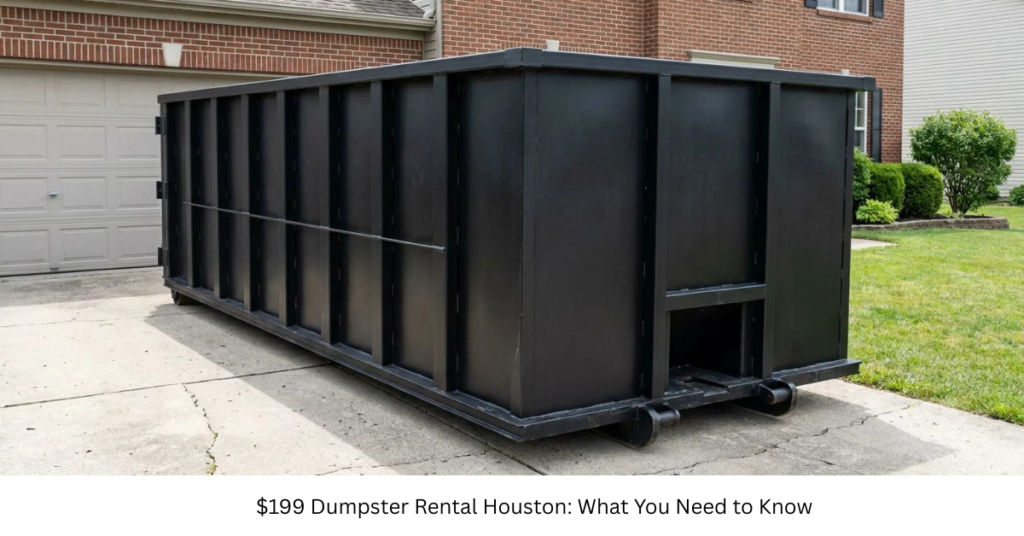

A home cleanout, renovation, roofing project, or yard cleanup can create a surprisingly large pile of waste. Before you start making endless trips to the landfill, a dumpster rental can make the job much simpler. If you’ve been searching for $199 dumpster rental Houston, you’re probably looking for an affordable option without sacrificing convenience.
The good news is that low-cost dumpster deals do exist, but the advertised price doesn’t always tell the whole story. Dumpster size, rental period, included weight, delivery distance, debris type, and additional fees can all affect your final bill.
This guide explains how inexpensive dumpster rentals work in Houston, what you should look for before booking, and how to determine whether a $199 offer is actually a good deal.
Is a $199 Dumpster Rental in Houston Realistic?
A $199 advertised rate can be an attractive starting point, but it is important to check what that price actually covers.
Current Houston-area pricing varies considerably by dumpster size, rental period, debris type, and included tonnage. For example, some local providers advertise 10-yard containers from around $350, while other 2026 pricing guides show starting rates around $299 for smaller containers.
That means a $199 offer should be viewed as a promotional or starting price, rather than assuming every dumpster, delivery, and disposal charge will be included.
Before booking, ask for the all-in price.
A legitimate quote should make clear:
- Dumpster size
- Rental duration
- Included weight
- Delivery and pickup charges
- Disposal fees
- Extra-day charges
- Overweight charges
- Prohibited-item fees
- Applicable taxes
- Permit requirements, if any
A cheap advertised rate can become expensive if several of these costs are added afterward.
What Can You Rent for Around $199?
The size of the dumpster is one of the biggest factors affecting the price.
10-Yard Dumpster
A 10-yard dumpster is generally suitable for smaller projects such as:
- Garage cleanouts
- Small bathroom renovations
- Attic cleanups
- Furniture removal
- Household decluttering
- Small landscaping projects
It can be a practical choice when you have several bulky items but not enough debris to justify a larger roll-off container.
15-Yard Dumpster
A 15-yard container provides more room and can work well for medium-sized cleanouts and remodeling jobs.
Consider this size if you’re removing flooring, drywall, cabinets, furniture, or other household construction debris.
20-Yard Dumpster
For larger renovations, roofing projects, estate cleanouts, and substantial home improvement work, a 20-yard dumpster may be more appropriate.
Although the upfront price is higher, choosing the right size can actually save money. Ordering a container that’s too small may force you to rent another one.
What Does a Dumpster Rental Price Usually Include?
Not every company structures its pricing the same way.
Some providers offer a flat-rate package that includes delivery, pickup, disposal, and a specific amount of waste. Others separate these charges.
For example, one Houston-area provider currently lists 10-yard dumpsters starting at $350 for three days, while another lists 10-yard rentals starting at $350 for three days with two tons included.
When comparing a $199 dumpster deal with another quote, don’t compare the headline price alone.
Instead, compare the entire package.
Check the Included Weight
Dumpster companies often establish a weight allowance. Going beyond that allowance can result in an additional charge.
This matters particularly with heavy materials such as:
- Concrete
- Brick
- Roofing shingles
- Dirt
- Tile
- Asphalt
- Demolition debris
A small dumpster filled with heavy construction material can reach its weight limit well before it reaches its physical capacity.
Check the Rental Period
A low introductory price may apply only to a short rental period.
Ask whether the quoted rate covers three days, seven days, or another period. Also ask what happens if your project takes longer.
Some local providers charge daily extension fees; for example, one Houston-area company currently lists an additional $20 per day after its initial rental period.
Hidden Dumpster Rental Fees to Watch For
The phrase “hidden fees” doesn’t necessarily mean a company is being dishonest. Sometimes charges simply depend on circumstances that aren’t known when the initial advertisement is published.
Still, you should ask about them before signing up.
1. Extra Weight Charges
If your debris exceeds the included weight allowance, you may be billed for the additional tonnage.
2. Extra Rental Days
Keeping the dumpster longer than the agreed rental period can result in daily extension fees.
3. Delivery Distance
Some companies charge more when a property is outside their standard service area.
4. Prohibited Materials
Certain materials require special handling and cannot simply be thrown into a standard dumpster.
5. Permit Costs
If the container needs to be placed somewhere that requires a permit, that cost may not be included in the advertised rental price.
6. Taxes and Other Charges
Always ask whether the advertised price is the final amount or a pre-tax promotional rate.
What Can You Put in a Houston Dumpster?
The answer depends on the rental company and the type of container.
Commonly accepted materials include:
- Household junk
- Furniture
- Cardboard
- Wood
- Drywall
- Remodeling debris
- Yard waste
- Roofing materials
However, companies commonly restrict hazardous or specialized waste. One Houston-area rental provider, for example, lists asbestos, hazardous waste, propane tanks, radioactive materials, ammunition, explosives, certain appliances, tires, and some heavy materials among restricted or prohibited items.
Never assume that something is acceptable simply because it fits inside the container.
If you’re unsure about an item, ask the rental company before loading it.
Dumpster Sizes: Which One Should You Choose?
Choosing the correct container is easier when you think about the type and volume of waste rather than simply choosing the cheapest option.
| Dumpster Size | Common Uses |
|---|---|
| 10 yard | Small cleanouts, furniture, minor remodeling |
| 15 yard | Medium cleanouts and renovation debris |
| 20 yard | Larger renovations and roofing projects |
| 30 yard | Major construction and large cleanouts |
| 40 yard | Large-scale construction or demolition |
If you’re mainly getting rid of household junk, a smaller dumpster may be sufficient.
For construction debris, however, speak with the rental company about both volume and weight. A container that appears large enough may still be unsuitable for particularly heavy materials.
Do You Need a Dumpster Permit in Houston?
This is an important question because the answer can depend on where the container is placed.
The City of Houston states that businesses, apartment complexes, strip centers, and other properties with dumpsters or roll-off containers exceeding 50 cubic feet must have a Combustible Waste Storage Permit. The city also says a permit is required when a dumpster of any size remains on-site for more than 60 days.
Placement can also affect permitting requirements. Before scheduling delivery, ask the rental company whether your proposed location requires additional approval.
If you’re unsure, check the City’s current requirements rather than relying on an old blog post or an assumption from a previous project.
How to Get the Best Dumpster Rental Deal in Houston
Finding an affordable dumpster isn’t just about searching for the lowest advertised number.
Use this process instead:
1. Estimate Your Waste
Make a rough list of everything you plan to throw away. This gives the rental company enough information to recommend an appropriate size.
2. Request an All-In Quote
Ask specifically:
“What will I pay in total, including delivery, pickup, disposal, taxes, and the included weight?”
This simple question can reveal whether a promotional rate is genuinely competitive.
3. Compare at Least Three Companies
Prices can vary significantly between providers. Compare the rental period, weight allowance, container size, and additional charges—not just the advertised rate.
4. Confirm Your Debris Type
Tell the company exactly what you’re disposing of. Heavy materials may have different pricing rules from ordinary household junk.
5. Ask About Extension Fees
Projects rarely go exactly according to plan. Knowing the daily extension rate beforehand can prevent an unpleasant surprise.
6. Prepare the Drop-Off Area
Choose a stable, accessible location with enough clearance for the delivery truck.
A driveway is often convenient, but make sure there is adequate room for the container and delivery equipment.
How to Save Money on Dumpster Rental
You don’t necessarily need the cheapest dumpster to get the best value.
A few practical strategies can lower your overall cost:
Choose the correct size. An undersized container can require a second rental, while an oversized container means paying for capacity you don’t need.
Break down bulky items. Disassembling furniture and flattening cardboard can help you use the available space more efficiently.
Avoid overfilling. Waste should generally remain within the container’s safe fill level. Overloading can create transportation and safety problems.
Separate prohibited materials. Don’t mix hazardous or restricted items into your ordinary household debris.
Book according to your project schedule. If you know you’ll need the dumpster for several days, ask about a longer rental package rather than automatically extending a short-term rental.
$199 Dumpster Rental vs. Junk Removal
A dumpster isn’t always the best solution.
With a dumpster rental, you do the loading. The company delivers the container, you fill it, and the company returns to haul it away.
Junk removal is different. The crew typically arrives, removes the material, loads the truck, and hauls everything away.
A dumpster may make more sense when:
- You’re doing a DIY renovation.
- You need several days to clean up.
- You’re clearing a house gradually.
- You have construction debris.
- You want control over when items are loaded.
Junk removal may be preferable when:
- You don’t want to lift heavy items.
- You have limited time.
- You need labor included.
- The waste is already organized and ready for removal.
Think about the labor as well as the rental price.
Tips for Placing a Dumpster on Your Property
Before delivery day, clear the area of vehicles, branches, toys, tools, and other obstacles.
The truck needs enough room to access the drop-off location and place the container safely.
Ideally, the surface should be:
- Firm
- Level
- Accessible
- Free of low-hanging obstacles
- Away from areas that could block traffic
If you’re concerned about driveway damage, ask the company whether it uses boards or another form of driveway protection beneath the container.
Common Mistakes to Avoid
A cheap dumpster can become an expensive one when the rental is poorly planned.
Avoid these common mistakes:
- Choosing a dumpster based only on price
- Failing to ask about weight limits
- Ignoring prohibited-item rules
- Assuming the rental period is unlimited
- Waiting until the last minute to book
- Overloading the container
- Not confirming where the dumpster can legally be placed
The goal isn’t simply to find the lowest advertised price. It’s to find the lowest realistic total cost for your particular project.
Frequently Asked Questions
Is a $199 dumpster rental in Houston really possible?
It can be offered as a promotional or starting price, but availability, size, rental duration, weight allowance, and additional fees can change the final cost. Always request an itemized quote before booking.
What is the cheapest dumpster size?
Smaller containers generally cost less than larger ones, although prices vary by company and project. A 10-yard dumpster is often a practical option for small cleanouts and minor remodeling projects.
How much does dumpster rental cost in Houston?
Houston dumpster prices vary considerably. Current local listings show smaller dumpsters starting in the roughly $299–$350 range from some providers, while larger containers can cost substantially more.
Your actual price depends on container size, rental period, location, debris type, and included weight.
How long can I keep a dumpster?
The rental period depends on your provider and contract. Some companies offer three-day rentals, while others offer longer periods. Additional daily fees may apply when you keep the container beyond the agreed period.
Can I put concrete in a dumpster?
Not necessarily. Concrete, brick, dirt, and other heavy materials may be restricted or priced differently because of their weight. Always tell the company what materials you have before ordering.
Can I put furniture in a dumpster?
Many rental companies accept ordinary furniture, but individual policies differ. Large furniture should be broken down whenever possible to maximize available space.
Do I need a permit for a dumpster in Houston?
It depends on the situation and placement. The City of Houston has specific permit requirements for certain dumpsters and commercial properties, including containers exceeding 50 cubic feet and containers remaining on-site for more than 60 days.
What should I ask a dumpster rental company before booking?
Ask about:
- Total price
- Dumpster dimensions
- Rental period
- Included weight
- Overage charges
- Extension fees
- Accepted materials
- Prohibited materials
- Delivery and pickup
- Permit requirements
Getting these details in writing can make the entire process much easier.
Final Thoughts on $199 Dumpster Rental Houston
A $199 dumpster rental Houston search can lead you to some attractive deals, but the advertised price should be the beginning of your research—not the end.
The best rental is the one that matches your project, provides enough capacity, clearly explains weight and rental limits, and gives you a transparent final price. Current Houston-area prices show why it’s important to compare the complete package rather than choosing a company solely because it advertises the lowest number.
Before booking, determine how much waste you have, identify the type of debris, confirm the rental period, ask about extra charges, and verify any applicable permit requirements.
With a little preparation, you can avoid unnecessary fees and make your cleanup considerably easier.