
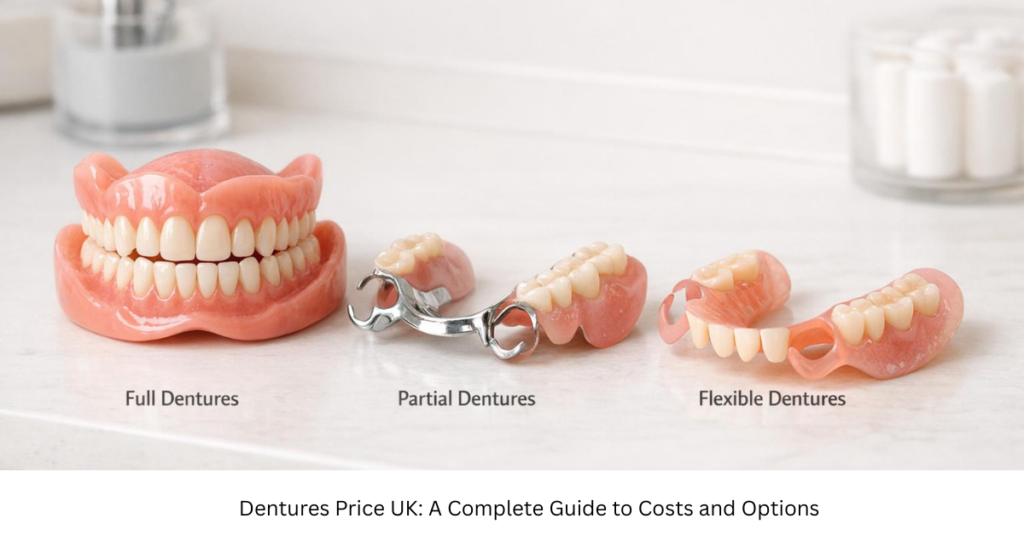

Losing several or all of your teeth can be a big adjustment, but replacing them does not necessarily have to be complicated or unaffordable. If you’re researching dentures price UK, you’ll quickly find that costs can vary considerably depending on the type of denture, materials, dentist, laboratory work and whether you choose NHS or private treatment.
A basic removable denture can cost considerably less than an implant-supported solution. At the other end of the scale, premium dentures and implant-retained dentures can involve several appointments and substantially higher treatment costs.
This guide explains the different types of dentures available in Britain, typical price ranges, what you are actually paying for, and the questions worth asking before committing to treatment.
How Much Do Dentures Cost in the UK?
There isn’t one fixed price for dentures across the UK. Private dental practices set their own fees, while NHS treatment is charged according to the relevant NHS dental charging system in England and has different arrangements in Scotland, Wales and Northern Ireland.
As a broad private-treatment guide, you may encounter prices such as:
| Denture type | Typical private price range |
|---|---|
| Basic acrylic partial denture | £500–£1,000+ |
| Premium partial denture | £1,000–£2,000+ |
| Full acrylic dentures | £700–£1,500+ per arch |
| Flexible dentures | £700–£1,500+ |
| Premium cosmetic dentures | £1,500–£3,000+ |
| Implant-retained dentures | £4,000–£10,000+ |
| More complex implant solutions | £10,000+ |
These figures are illustrative private-sector ranges rather than fixed national prices. Some clinics may charge less, while specialist or premium practices can charge considerably more.
The most important thing is to check exactly what is included in the quoted fee.
What Determines Denture Prices?
Two people can be quoted very different amounts for seemingly similar dentures. That’s because the price isn’t simply for the finished set of teeth.
Several factors can influence your final bill.
1. Type of Denture
A straightforward acrylic denture is generally less expensive than a precision-made premium denture. Flexible materials, metal frameworks and implant-supported designs can all increase the cost.
2. Number of Teeth Being Replaced
Replacing a few missing teeth usually requires a partial denture, while someone without natural teeth in an arch may need a complete denture.
The amount of laboratory work and complexity of the design can affect the final price.
3. Materials Used
Acrylic is widely used for conventional dentures. Other options may include flexible thermoplastic materials or cobalt-chrome frameworks.
Premium materials can provide advantages in terms of strength, appearance, fit or comfort, but they can also increase the cost.
4. Dental Extractions
If remaining teeth need to be removed before a denture can be fitted, extraction fees may be charged separately.
In some cases, immediate dentures can be made before extraction so that the patient does not have to go without teeth during healing.
5. Dentist and Dental Laboratory
Dentures are usually custom-made rather than simply selected from a shelf. The skill and experience of the dentist, technician and laboratory can therefore influence the price.
Practices using specialist dental laboratories or highly customised techniques may charge more.
6. Follow-Up Appointments
Ask whether your quote includes adjustments and follow-up visits. A denture may need minor modifications after you begin wearing it, particularly during the initial adjustment period.
Full Dentures Price UK: What Should You Expect?
For someone who has lost all the teeth in the upper or lower arch, a complete denture may be recommended.
The full dentures price UK patients encounter privately can vary from several hundred pounds to several thousand pounds, depending on the materials and level of customisation.
Basic acrylic dentures tend to sit at the lower end of private pricing. More advanced cosmetic dentures may use carefully selected tooth shapes, shades and gum colouring to create a more natural appearance.
If you require dentures for both the upper and lower arches, remember that a quoted price for “a full denture” may refer to one arch rather than both.
Always ask:
- Is the price for one or two dentures?
- Are consultations included?
- Are impressions included?
- Are adjustments included?
- Is a temporary or immediate denture included?
- What happens if the denture needs modification?
- Are future repairs or relines charged separately?
Flexible Dentures Price UK
Flexible dentures are removable appliances made from flexible thermoplastic materials rather than traditional rigid acrylic.
They can be appealing because they are often lightweight and may have fewer visible metal components. For some patients, the material can also feel more comfortable than a conventional design.
The flexible dentures price UK patients receive from private dentists commonly falls somewhere around the mid-range of private denture costs, although prices vary significantly between practices.
Flexible dentures aren’t suitable for everyone, however. Your dentist needs to consider the location of missing teeth, your bite, gum health, remaining teeth and the amount of support available.
A flexible denture isn’t automatically the better choice simply because it costs more.
Implant-Retained Dentures Price UK
Implant-retained dentures are different from conventional removable dentures because dental implants are placed into the jaw to provide additional support.
Instead of relying primarily on the gums and natural suction, the denture attaches to implant components. This can make the prosthesis feel more secure, particularly for people who struggle with a loose lower denture.
The implant-retained dentures price UK patients are quoted can commonly reach several thousand pounds. A broad private range might be around £4,000–£10,000+, depending on the number of implants, the denture itself, preparatory treatment and the clinic.
The final price may include:
- Initial consultation and assessment
- X-rays or 3D imaging
- Implant placement
- Healing and review appointments
- Implant components or attachments
- Custom denture construction
- Follow-up appointments
Some clinics advertise a low starting price that covers only part of the treatment. Make sure you compare complete treatment plans, rather than headline prices.
What About Permanent Dentures Price UK?
The phrase “permanent dentures” can be confusing.
Traditional dentures are removable. When people use the term permanent dentures, they may actually be referring to implant-supported or fixed teeth that are designed to remain in place rather than being taken out like conventional dentures.
Fixed implant solutions are usually much more expensive because they involve surgical treatment, multiple components and extensive planning.
If a dental practice uses the term “permanent dentures”, ask exactly what treatment they mean. Find out whether the teeth are removable by the patient, removable by the dentist, or permanently fixed to implants.
NHS Denture Costs vs Private Dentures
One of the biggest differences in UK dental costs is whether treatment is provided through the NHS or privately.
In England, dentures may be available as part of an NHS course of treatment where clinically necessary. NHS dental charges are divided into bands, and a denture falls into the relevant higher treatment band when applicable.
The NHS charging structure can change, so check the current official NHS information before budgeting for treatment.
In Scotland, Wales and Northern Ireland, NHS dental charging arrangements differ from those in England.
Private dentistry works differently. Each practice establishes its own fees, and you may have a much wider selection of materials, designs and treatment approaches.
Why Are Implant Dentures So Much More Expensive?
It can be tempting to compare a conventional denture costing under £1,000 with an implant solution costing several thousand pounds and wonder why there is such a large difference.
The answer is that implant treatment involves considerably more than making a removable denture.
A typical implant-based treatment may involve:
- Detailed examination
- Diagnostic imaging
- Treatment planning
- Surgical implant placement
- Healing time
- Implant components
- Custom prosthetic work
- Several dental appointments
- Follow-up and maintenance
There may also be additional costs if bone grafting, tooth extraction or other preparatory treatment is required.
For this reason, implant dentistry should be compared as a complete treatment journey, rather than simply comparing the price of the final denture.
Are Expensive Dentures Worth It?
Not necessarily.
The most expensive option isn’t automatically the most suitable one. Your ideal denture depends on your oral health, lifestyle, budget, expectations and the condition of your remaining teeth and gums.
For example, a conventional acrylic denture may be perfectly adequate for someone who wants an affordable removable solution. Another patient may prioritise stability and choose an implant-supported design.
When comparing options, consider:
- Comfort
- Appearance
- Stability
- Durability
- Maintenance
- Repairability
- Expected lifespan
- Initial cost
- Long-term cost
A good dentist should explain the advantages and limitations of each option rather than simply recommending the most expensive treatment.
How Long Do Dentures Last?
Dentures don’t last forever.
With good care, conventional dentures can often remain usable for several years, but they may eventually become loose or uncomfortable as the shape of the gums and underlying bone changes.
Signs that your dentures may need attention include:
- Increasing looseness
- Sore spots
- Difficulty chewing
- Cracks or damaged teeth
- Changes in speech
- Clicking while eating or talking
- Difficulty keeping the denture in position
Sometimes a denture can be repaired or relined instead of completely replaced.
How to Get the Best Value on Dentures
The cheapest quote isn’t always the best deal. A low initial price can become expensive if consultations, adjustments, repairs or additional procedures are excluded.
Before accepting a quote, ask the dentist for a written breakdown.
Use this checklist:
- Ask whether the price covers one or both arches.
- Confirm the type and material of the denture.
- Check whether dental examinations are included.
- Ask whether impressions and laboratory work are included.
- Find out how many adjustment appointments are included.
- Ask about repairs and relining.
- Check whether extractions are charged separately.
- If considering implants, ask about every stage of treatment.
- Request the expected total cost in writing.
- Compare treatment plans, not just advertised starting prices.
Dentures and Dental Insurance
Some private dental insurance plans may contribute towards dentures, although the amount and eligibility depend entirely on the policy.
There may be annual limits, waiting periods, exclusions or restrictions on pre-existing treatment.
If you have dental insurance, check your policy before beginning treatment. It’s also worth asking your dentist whether they can provide the treatment estimate needed by your insurer.
Can Dentures Be Paid for Monthly?
Many private dental practices offer finance options that allow eligible patients to spread treatment costs over a period of time.
However, finance isn’t free simply because the cost is divided into monthly payments. Interest, fees and eligibility requirements can vary.
Before agreeing to finance, look at the total amount repayable, not just the monthly figure.
Frequently Asked Questions
How much are dentures in the UK?
Private denture costs vary widely. Basic options may cost several hundred pounds, while premium dentures can run into thousands. Implant-supported solutions generally cost considerably more.
What is the cheapest type of denture?
Basic acrylic removable dentures are generally among the least expensive options available privately. NHS treatment may be cheaper for eligible patients, depending on the applicable charging arrangements.
Are dentures covered by the NHS?
Dentures can be available through NHS dental services where clinically necessary, but eligibility, availability and charges depend on where you live and your circumstances.
How much do implant-retained dentures cost?
Implant-retained treatment can commonly cost several thousand pounds privately. A broad estimate is around £4,000–£10,000+, but the exact price depends on the number of implants and the treatment required.
Are flexible dentures better than acrylic dentures?
Not necessarily. Flexible dentures can offer certain comfort and aesthetic benefits, but suitability depends on your individual mouth, remaining teeth and bite. Your dentist can advise which design is appropriate.
How long does it take to get dentures?
Straightforward dentures may be completed over several appointments. The process can take longer if extractions, healing, complex dental work or implants are involved.
Can I eat normally with dentures?
Most people can eat a wide variety of foods once they have adapted to their dentures. It can take time to become comfortable with chewing, particularly with harder or sticky foods.
Do dentures look natural?
Modern dentures can look remarkably natural. Tooth shape, colour, gum appearance and the quality of the dental laboratory work all influence the final result.
Do dentures need to be replaced?
Eventually, yes. Dentures can wear down, and changes to the gums and jawbone can affect their fit. Your dentist can determine whether an adjustment, reline, repair or replacement is appropriate.
Final Thoughts on Dentures Price UK
When researching dentures price UK, it’s easy to focus on the headline figure. But the cheapest quote isn’t necessarily the best value, and the most expensive treatment isn’t automatically the right choice either.
Conventional acrylic dentures can provide a relatively affordable way to replace missing teeth. Flexible and premium options may offer different benefits, while implant-retained solutions can provide significantly greater stability at a higher cost.
The best starting point is a proper dental assessment and a written treatment plan that clearly explains what’s included in the price. Compare the overall treatment, materials, expected lifespan and aftercare rather than choosing solely on cost.
If you’re considering dentures, arrange a consultation with a qualified dental professional and ask them to explain all suitable options. That way, you can make a decision based on your oral health, comfort, expectations and budget—not simply an advertised price.