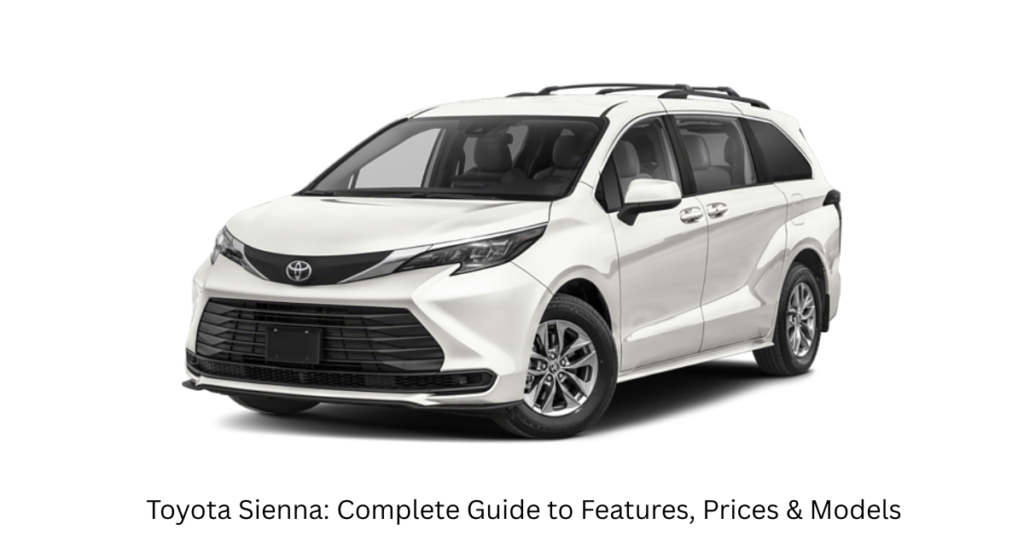

If you think minivans are boring, the Toyota Sienna might change your mind. It combines family-friendly space with hybrid efficiency, available all-wheel drive, modern technology, and a surprisingly upscale cabin.
For families that regularly carry passengers, luggage, sports equipment, groceries, or a little bit of everything, the Sienna makes a strong case for itself. Toyota has also taken an interesting approach by making the current-generation model hybrid-only, giving buyers fuel economy that is difficult to match among traditional minivans.
The current generation arrived for the 2021 model year, and Toyota has continued refining it through the 2024, 2025, and 2026 model years.
So, whether you’re shopping for a new minivan, researching a used Toyota Sienna, or simply trying to understand which model year makes the most sense, here’s what you need to know.
What Is the Toyota Sienna?
The Sienna is Toyota’s three-row minivan, designed primarily for families and people who need substantial passenger and cargo capacity. Unlike an SUV, its sliding rear doors and low floor make getting children, older passengers, and bulky items in and out considerably easier.
The modern Sienna is also unusual because its powertrain is exclusively hybrid. The current setup combines a 2.5-liter four-cylinder engine with Toyota’s hybrid system and an electronically controlled continuously variable transmission.
For the 2026 model year, Toyota lists 245 total system horsepower and EPA-estimated fuel economy of up to 36 mpg combined for front-wheel-drive models. AWD versions are rated at 35 mpg combined.
That’s a compelling combination for anyone who spends a lot of time driving.
Toyota Sienna Hybrid: What Makes It Different?
The biggest selling point of the modern Sienna is arguably its hybrid powertrain.
Instead of choosing between a traditional gasoline engine and a hybrid version, buyers get hybrid technology as standard. That means you don’t have to pay extra simply to access the more efficient powertrain.
Fuel Economy
Toyota says the current Sienna can achieve up to 36 mpg combined in FWD configuration. AWD models sacrifice a small amount of efficiency but remain highly economical for a vehicle of this size.
That matters in everyday driving. A family putting thousands of miles on a vehicle each year can potentially save considerably on fuel compared with a larger, conventional gasoline-powered vehicle.
Available All-Wheel Drive
AWD is another unusual advantage.
Toyota uses an electronic AWD system with a separate electric motor powering the rear wheels. There’s no conventional mechanical driveshaft running from the engine to the rear axle.
For drivers dealing with rain, snow, gravel roads, or simply wanting additional traction, it’s a useful option. Toyota also makes AWD standard on certain higher trims, including the Woodland Edition and Platinum for 2026.
Toyota Sienna 2024: What You Get
The 2024 model sits within the current fourth generation and offers the same basic hybrid-focused formula.
Toyota listed several trims, including:
- LE
- XLE
- XSE
- Woodland Edition
- Limited
- Platinum
The 2024 lineup was rated at up to 36 mpg combined, while AWD versions were slightly less efficient. Toyota also offered seating configurations for seven or eight passengers depending on configuration.
The 2024 model also brought an XSE Premium Package with upgrades such as leather seating, memory functions, heated and ventilated front seats, and other comfort features.
For buyers considering a nearly new vehicle, the 2024 version can be particularly interesting because it combines the modern hybrid platform with a potentially lower purchase price than a brand-new model.
Toyota Sienna 2025: What’s New?
The Toyota Sienna 2025 received a number of technology and interior updates rather than a complete redesign.
One of the most interesting additions was Toyota’s Advanced Rear Seat Reminder system. It uses a millimeter-wave radar sensor to monitor the second and third rows and can provide escalating alerts if movement is detected after the vehicle has been parked and locked.
The 2025 range included:
- LE
- XLE
- XSE
- Woodland Edition
- Limited
- Platinum
Toyota’s published specifications show up to 36 mpg combined and a starting MSRP of $39,485 on its model page, although Toyota’s press materials cite $39,185 before dealer processing and handling fees. Pricing can therefore vary by configuration, market, and applicable fees.
The 2025 version also received a more modern 12.3-inch Toyota Audio Multimedia system, along with wireless Apple CarPlay and Android Auto compatibility.
2026 Toyota Sienna: What’s Changed?
The 2026 Toyota Sienna continues the same basic hybrid formula but adds more standard equipment, particularly on the lower and middle trims.
Toyota made several features standard on the LE, including:
- Eight-speaker audio
- Rear window shades
- Auto-dimming rearview mirror
- HomeLink universal transceiver
- Power rear liftgate with jam protection
- Windshield de-icer
- Black roof rails
- One-year Remote Connect trial
The XLE and XSE also receive standard roof rails, while the XSE gains a 12-speaker JBL Premium Audio system. Toyota also introduced Heavy Metal as a new exterior color.
Toyota announced a starting MSRP of $40,120 for the 2026 LE FWD, excluding dealer processing and handling fees.
2026 Powertrain and Efficiency
The mechanical formula remains familiar:
- 2.5-liter four-cylinder hybrid
- 245 total system horsepower
- Electronically controlled CVT
- FWD or available AWD
- Up to 36 mpg combined FWD
- Around 35 mpg combined AWD
This makes the 2026 model more of an evolution than a revolution. Toyota is essentially taking a proven formula and adding more equipment and convenience.
Toyota Sienna Price: How Much Does It Cost?
Pricing depends heavily on model year, trim, drivetrain, options, location, taxes, and dealer charges.
For reference, Toyota’s published U.S. pricing has placed recent base models around the high-$30,000 to low-$40,000 range.
For the 2026 model, Toyota lists:
| Trim | 2026 Base MSRP |
|---|---|
| LE | $40,820 |
| XLE | $45,520 |
| XSE | $48,745 |
| Limited | $51,505 |
These figures are Toyota’s published base MSRPs and don’t necessarily represent the final transaction price.
The Toyota Sienna Platinum sits at the premium end of the lineup. It makes sense for buyers who prioritize luxury, technology, and comfort over getting the lowest possible purchase price.
Toyota Sienna Platinum: Is the Top Trim Worth It?
The Platinum is essentially the luxury-oriented version of the family minivan.
Depending on model year and configuration, premium features can include leather-trimmed seating, advanced audio, upgraded technology, and additional convenience equipment.
The question isn’t whether it’s comfortable—it is. The real question is whether those extras justify the additional cost.
For someone who spends several hours every week in the vehicle, the answer may be yes. For a buyer primarily interested in reliability, passenger capacity, and fuel economy, a lower trim can offer considerably better value.
Toyota Sienna Minivan Interior and Cargo Space
This is where the Sienna’s minivan design really earns its keep.
The low floor and sliding doors make loading passengers easier than in many three-row SUVs. Parents can also appreciate the ability to open the doors in tight parking spaces without worrying about another car being parked immediately beside them.
Depending on configuration, the Sienna can accommodate seven or eight occupants.
Its third row can also be folded to increase cargo flexibility, making the vehicle useful for everything from school runs to airport trips and weekend travel.
Why Families Like the Interior
Some of the most useful advantages are not flashy:
- Sliding rear doors
- Three-row seating
- Flexible cargo area
- Multiple USB charging points
- Available second-row captain’s chairs
- Available rear entertainment system
- Available premium audio
- Available four-zone climate control
Toyota has clearly designed the cabin around people who actually have to live with the vehicle every day.
How Reliable Is a Used Toyota Sienna?
Reliability is one of the main reasons buyers consider a pre-owned Sienna.
However, buying used isn’t simply about choosing the newest vehicle you can afford. Maintenance records, accident history, mileage, previous ownership, and overall condition matter enormously.
If you’re considering a used Toyota Sienna for sale, pay particular attention to:
- Service records: Look for evidence of regular maintenance.
- Accident history: Check whether the vehicle has experienced significant structural damage.
- Hybrid-system condition: Have a qualified technician inspect the vehicle.
- Tires and brakes: These can become expensive replacement items.
- Sliding doors: Make sure both doors operate smoothly.
- Interior wear: Excessive wear can reveal heavy commercial or family use.
- VIN history: Verify title, mileage, ownership, and reported accidents.
A well-maintained older minivan can be a smart purchase, but condition should always take priority over a low advertised price.
2020 Toyota Sienna vs. Newer Models
The 2020 model is particularly interesting because it belongs to the previous generation.
Unlike the post-2020 Sienna, it uses a conventional gasoline powertrain rather than the hybrid-only setup introduced with the 2021 redesign.
That makes the 2020 model worth considering for buyers who prefer the characteristics of a traditional V6-powered minivan or are shopping on a tighter used-car budget.
On the other hand, newer models offer the newer platform, standard hybrid technology, improved fuel economy, and more modern cabin technology.
2021 Toyota Sienna: The Major Turning Point
The 2021 model year is important because Toyota redesigned the Sienna and moved the entire lineup to hybrid power.
The redesign changed more than just the styling. It introduced the foundation that continues in today’s models.
If you’re comparing a Toyota Sienna 2021 with an older used model, the hybrid system, newer interior, available AWD, and modern technology are major reasons to consider the newer generation.
However, because 2021 was the first year of the redesigned generation, buyers should still inspect any individual used vehicle carefully rather than assuming every example is identical.
2022 Toyota Sienna: A Strong Used Option
The 2022 model benefits from being part of the established fourth generation while often costing less than a comparable newer vehicle.
It retains the hybrid-only powertrain and the basic features that made the redesigned model appealing.
For someone searching for a balance between modern equipment and used-car value, the 2022 model can be worth investigating.
2023 Toyota Sienna and Safety
Safety is another area where the Sienna has performed well.
The Insurance Institute for Highway Safety named the 2023–24 Sienna a Top Safety Pick+, one of the strongest distinctions in its class under the applicable testing criteria.
The current-generation vehicle also comes with Toyota’s suite of driver-assistance technologies, although exact equipment and ratings can vary by model year.
It’s worth remembering that a strong safety rating doesn’t eliminate the importance of responsible driving, good tires, proper maintenance, and appropriate child restraints.
2011 Toyota Sienna: Is an Older Model Still Worth Buying?
An older Sienna can be tempting because of its lower purchase price and established reputation.
But age changes the buying equation.
A 2011 model may have accumulated significant mileage and could require repairs involving suspension components, brakes, cooling systems, electronics, sliding doors, or other age-related parts.
If you’re considering one, don’t skip the pre-purchase inspection. Spending money on an independent inspection before buying can potentially save you much more later.
Should You Buy a New or Used Sienna?
There’s no universal answer.
Buy New If:
- You want the latest technology.
- You plan to keep the vehicle for many years.
- You want the latest available safety and convenience features.
- You prefer having a new-car warranty.
- You drive enough for hybrid fuel savings to matter.
Buy Used If:
- Your budget is limited.
- You’re comfortable with an older interior or technology package.
- You want to avoid the largest portion of new-car depreciation.
- You find a well-maintained vehicle with strong service records.
- You’re willing to have a professional inspection performed.
The sweet spot may be a lightly used recent-generation Sienna that has already experienced some depreciation but still offers modern hybrid technology.
Toyota Sienna for Sale: What Should You Look For?
If you’re searching online for a Toyota Sienna for sale, don’t judge listings by price alone.
A cheaper vehicle isn’t necessarily the better deal. A slightly more expensive Sienna with complete maintenance records, clean history, good tires, and fewer issues can ultimately cost less to own.
Before making an offer, compare:
- Model year
- Trim level
- Mileage
- FWD vs. AWD
- Number of previous owners
- Accident history
- Service records
- Tire condition
- Hybrid-system condition
- Dealer or private-party pricing
- Available warranty
It’s also smart to compare several vehicles rather than falling in love with the first attractive listing you find.
Pros and Cons
Pros
- Excellent fuel economy for a minivan
- Hybrid powertrain comes standard
- Available AWD
- Spacious three-row cabin
- Convenient sliding doors
- Strong safety credentials
- Comfortable long-distance cruiser
- Lots of family-focused technology
- Multiple trim levels
Cons
- New models aren’t cheap
- Higher trims can become expensive quickly
- Hybrid-only powertrain limits choice for traditional-engine buyers
- Some features are restricted to expensive trims or packages
- Third-row and cargo flexibility may not suit every buyer
- Used examples can vary considerably in condition
Frequently Asked Questions
Is the Toyota Sienna a good minivan?
Yes. Its combination of passenger space, hybrid efficiency, available AWD, comfort, and family-oriented features makes it one of the strongest choices in the minivan segment.
Is the Toyota Sienna hybrid?
All Sienna models from the 2021 redesign onward are hybrid-powered. Toyota’s current lineup uses a 2.5-liter four-cylinder hybrid system with 245 total system horsepower.
How many people can a Sienna seat?
Depending on configuration, recent models can seat seven or eight passengers. The exact seating arrangement depends on trim and configuration.
What is the Toyota Sienna price?
Pricing changes by model year and trim. Toyota lists the 2026 Sienna LE at $40,820 base MSRP, while higher trims cost substantially more. Dealer charges, options, taxes, and destination-related costs can increase the final price.
Is AWD available?
Yes. AWD is available on several trims, while Toyota makes it standard on specific higher-level configurations.
Is a used Sienna worth buying?
A well-maintained used Sienna can be an excellent family vehicle. However, buyers should check service history, accident records, mileage, hybrid-system condition, and overall mechanical condition before purchasing.
Which Sienna year is best?
There isn’t one universally best year. The 2021 redesign is important because it introduced the hybrid-only fourth generation, while later models add incremental technology and feature improvements. Your budget and priorities should determine which year makes the most sense.
Does the Sienna get good gas mileage?
Yes. Recent models can achieve up to 36 mpg combined in FWD configuration, which is impressive for a three-row minivan. AWD models generally achieve slightly lower fuel economy.
Final Verdict
The Toyota Sienna has managed something that isn’t easy in the minivan market: it has made practicality genuinely appealing. Its hybrid-only powertrain delivers impressive efficiency, available AWD adds versatility, and the spacious interior is built around the realities of family life.
The 2024 model offers a mature version of the current-generation formula, the 2025 model adds useful technology and convenience upgrades, and the 2026 model continues the evolution with more standard equipment.
If you’re shopping new, compare trims carefully before paying for features you may not need. If you’re looking at a used vehicle, prioritize maintenance history and condition over model-year bragging rights.
Ultimately, the right Sienna isn’t necessarily the most expensive one. It’s the one that gives you the space, efficiency, features, and reliability you actually need without stretching your budget too far.