
If you think a modern SUV has to choose between being comfortable on the highway and capable on a rocky trail, the Ford Bronco is here to challenge that idea. Built around a rugged, adventure-focused design, the Bronco has become one of Ford’s most recognizable SUVs—and its story goes back much further than the current generation.
The Bronco first appeared in 1966 as a compact four-wheel-drive utility vehicle. After disappearing from Ford’s lineup in 1996, it returned for the 2021 model year with removable doors and roof panels, two- and four-door configurations, serious off-road hardware, and a design heavily influenced by its heritage.
Today, shoppers can choose from several Bronco configurations, including everyday-oriented trims, trail-focused models, and the high-performance Raptor. There is also the smaller Ford Bronco Sport, which shares the Bronco name and styling cues but is built for a somewhat different type of buyer.
What Makes the Ford Bronco Special?
The easiest way to understand the Bronco is to look at what Ford was trying to accomplish from the beginning.
When Ford developed the original model, it studied Jeep and International Harvester Scout owners to understand what they liked and disliked about existing utility vehicles. Ford wanted something that could handle rough terrain without completely sacrificing comfort and everyday usability.
That basic philosophy still defines the vehicle today.
Modern models combine:
- Four-wheel-drive capability
- Removable roof and doors on applicable configurations
- Multiple terrain-focused drive modes
- Turbocharged engines
- Trail-oriented suspension systems
- Available 35-inch tires
- Two-door and four-door body styles
- A wide range of factory accessories and packages
The result is an SUV that feels equally at home on a weekend trail trip and a normal commute.
A Brief History of the Ford Bronco
The Bronco’s history is one of the reasons the name carries so much weight among SUV enthusiasts.
The First Generation: 1966–1977
The original Bronco arrived for the 1966 model year. Ford described it as an all-purpose vehicle, and buyers could choose among roadster, sports utility, and wagon body styles. Four-wheel drive was a key part of the formula.
It also developed a reputation for competition. Early Broncos competed successfully in off-road racing, including events such as the Baja 1000. Ford’s association with drivers such as Parnelli Jones helped establish the Bronco as more than just a practical utility vehicle.
Larger Broncos: 1978–1979
Ford significantly increased the Bronco’s size for 1978. The SUV moved onto a larger platform related to the F-Series pickup, providing more space and a more comfortable road-going character while retaining four-wheel-drive capability.
The 1980s Evolution
The 1980–1986 generation introduced important changes, including independent front suspension through Ford’s Twin-Traction Beam design. The goal was to improve ride characteristics while maintaining useful ground clearance and off-road ability.
Ford then redesigned the vehicle again for 1987, giving it a more aerodynamic appearance and a more modern interior.
The Final Classic Generation: 1992–1996
The fifth generation ran from 1992 through 1996 and is particularly popular with enthusiasts today. It featured a more streamlined exterior and additional safety equipment compared with earlier versions.
The final Bronco left the production line on June 12, 1996. Ford built 1,148,926 Broncos during the model’s original 31-year production run.
Then came the long wait.
The Modern Bronco Returns
Ford brought the Bronco name back for 2021, transforming it into a modern off-road SUV while deliberately retaining visual and functional connections to earlier generations.
The new design’s removable doors and roof, upright windshield, boxy body, round headlights, and trail-oriented engineering helped distinguish it from more conventional crossover SUVs.
That combination of nostalgia and modern engineering is a major reason the revived Bronco attracted so much attention.
2026 Ford Bronco: Models and Trims
For the 2026 model year, Ford offers a broad Bronco lineup. Current starting prices listed by Ford range from about $40,795 for the Base model to $80,990 for the Raptor, before applicable fees, options, taxes, and dealer charges.
Here is a simplified look at the lineup:
| Trim | Starting MSRP* | Character |
|---|---|---|
| Base | $40,795 | Entry-level Bronco |
| Big Bend | $41,790 | More equipment and versatility |
| Outer Banks | $48,685 | Comfort and style |
| Badlands | $49,385 | Serious off-road capability |
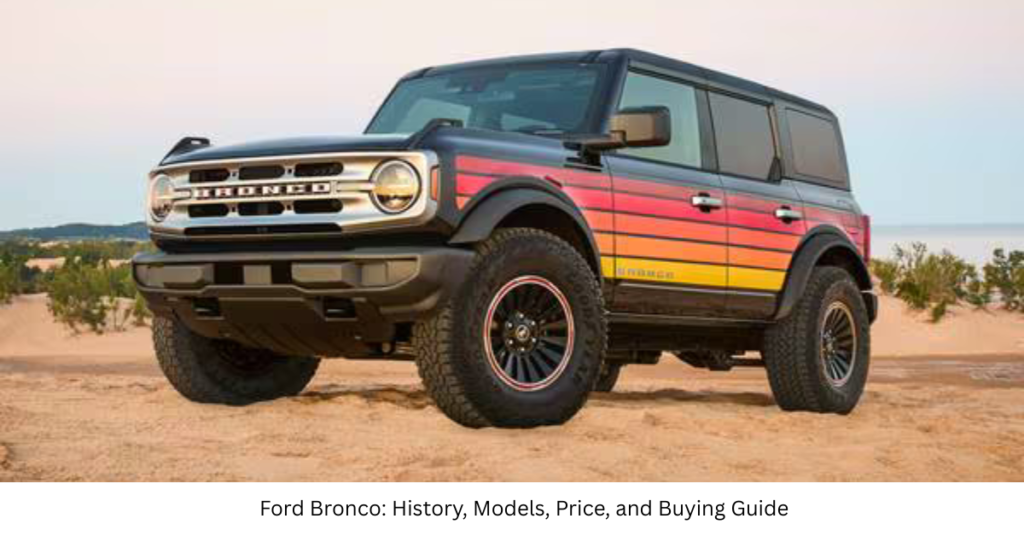
| Heritage Edition | $52,120 | Retro-inspired design |
| Stroppe Edition | $69,995 | Baja-inspired performance |
| Raptor | $80,990 | High-performance off-roader |
*Ford’s listed starting prices at the time of research; pricing can change and excludes applicable charges and options.
Base
The Base model is the simplest way into the lineup. It is particularly appealing to buyers who would rather spend money on specific equipment or aftermarket modifications than luxury-oriented features.
Big Bend
Big Bend adds equipment and gives buyers a more rounded configuration. It makes sense for someone who wants an adventure-ready SUV without moving too far up the price ladder.
Outer Banks
Outer Banks puts more emphasis on appearance and comfort. It is a good choice for buyers who expect to use their SUV as a daily driver while still wanting genuine off-road credentials.
Badlands
Badlands is where the Bronco’s trail-focused personality becomes especially obvious. It is designed for buyers who prioritize off-road hardware, additional terrain capability, and more demanding adventures.
Heritage Edition
Heritage Edition pays tribute to the original Bronco through retro-inspired styling. It combines classic visual cues with modern mechanicals and technology.
Stroppe Edition
The Stroppe Edition is inspired by Ford’s Baja racing heritage and pays homage to the legendary Bill Stroppe racing Broncos.
Raptor
At the top of the range sits the Ford Bronco Raptor.
The 2026 Raptor uses a 3.0-liter EcoBoost V6 producing 418 horsepower and 440 lb-ft of torque. Ford also lists a maximum towing capacity of 4,500 pounds and the Raptor-exclusive HOSS 4.0 high-performance off-road suspension system.
This isn’t simply a Bronco with a bigger engine. The Raptor is engineered around high-speed off-road driving, increased suspension capability, larger tires, and aggressive terrain use.
Engine Options and Performance
The 2026 lineup offers three main powertrains.
The 2.3-liter EcoBoost four-cylinder produces 300 horsepower and 325 lb-ft of torque. The available 2.7-liter EcoBoost V6 produces 330 horsepower and 415 lb-ft, while the Raptor’s 3.0-liter EcoBoost V6 produces 418 horsepower and 440 lb-ft.
The 2.3-liter engine is standard across several models, while the 2.7-liter V6 is available on selected trims. The Raptor receives the 3.0-liter V6.
For buyers, the decision is fairly straightforward:
- 2.3L EcoBoost: A sensible balance of power and efficiency.
- 2.7L EcoBoost V6: Better suited to drivers who want additional torque and performance.
- 3.0L EcoBoost V6: The choice for maximum performance in the Raptor.
Maximum conventional towing is generally 3,500 pounds for most configurations, while the Raptor can tow up to 4,500 pounds when properly equipped.
Ford Bronco Sport vs. Bronco
One of the most common sources of confusion is the difference between the full-size Bronco and the Ford Bronco Sport.
Despite sharing a name and design language, they are different vehicles.
The Bronco is the larger, more purpose-built off-road SUV. The Bronco Sport is smaller, easier to maneuver in urban environments, and designed to balance everyday practicality with outdoor capability.
The 2026 Bronco Sport seats up to five people and uses an 8-speed automatic transmission. Depending on configuration, it uses either a 1.5-liter or 2.0-liter EcoBoost engine, with standard 4×4.
The larger 2.0-liter version is available in the Badlands model and produces the capability needed for the model’s more serious off-road setup. The 2026 Badlands can tow up to 2,700 pounds.
Which One Should You Choose?
Choose the larger Bronco if:
- Off-road capability is a major priority.
- You want removable doors and roof panels.
- You prefer a two-door or larger four-door SUV.
- You want access to high-performance variants such as Raptor.
- You plan to tackle more demanding trails.
Consider the Bronco Sport if:
- You want a smaller SUV.
- Most driving will happen on pavement.
- You still want standard 4×4.
- Lower purchase and running costs matter.
- You need a practical five-seat daily driver.
For 2026, Ford lists the Bronco Sport starting around the low-$30,000 range, depending on the exact pricing source and configuration. Ford’s current model selector lists the Big Bend at $32,340, while individual Ford model pages may show different figures based on pricing dates and configurations.
Understanding the Ford Bronco Price
The Ford Bronco price varies considerably depending on trim, engine, body style, options, packages, destination charges, taxes, and dealer pricing.
For 2026, Ford’s official model selector shows a starting MSRP of $40,795 for the Base and $80,990 for the Raptor.
That is a huge gap, but there is a reason for it. A basic Bronco and a Raptor are designed for very different buyers.
When comparing prices, don’t look only at the advertised MSRP. Consider:
- Destination and delivery charges
- Optional packages
- Larger wheels and tires
- Engine upgrades
- Dealer fees
- Taxes and registration
- Financing costs
- Insurance
- Maintenance
- Fuel expenses
A cheaper trim with thousands of dollars in options can quickly approach the price of a better-equipped factory configuration.
Should You Buy a New Ford Bronco?
A new Ford Bronco makes the most sense for someone who wants the latest technology, factory warranty coverage, current styling, and the ability to select exactly how the SUV is configured.
Buying new also means you know the vehicle’s history from day one.
However, new vehicles depreciate, and highly equipped versions can become expensive quickly.
Before ordering or purchasing one, decide how you actually intend to use it. If you spend most of your time commuting through a city, you may not need every available off-road package.
If weekends regularly involve mud, rocks, sand, or remote trails, spending more on the right hardware can be worthwhile.
Buying a Ford Bronco for Sale
Searching for a Ford Bronco for sale can be surprisingly complicated because there are so many combinations of model year, trim, engine, body style, packages, and aftermarket modifications.
Don’t judge a vehicle purely by appearance.
A Bronco with oversized tires and aggressive wheels may look impressive, but the modifications could also tell you how hard the vehicle has been driven.
Before buying, check:
- Vehicle history: Look for accidents, flood damage, ownership history, and service records.
- Undercarriage: Inspect skid plates, suspension components, axles, and frame areas.
- Tires: Uneven wear can reveal alignment or suspension problems.
- 4×4 system: Make sure the four-wheel-drive system engages correctly.
- Removable panels: Check that doors, roof panels, seals, and hardware function properly.
- Interior: Look for water intrusion, especially around removable roof sections.
- Service history: Regular maintenance is particularly important on vehicles used off-road.
- Modifications: Ask who installed aftermarket suspension, wheels, bumpers, lights, or other equipment.
What About a Used Ford Bronco for Sale?
Looking for a used Ford Bronco for sale can be a smart way to enter the lineup without paying the price of a brand-new vehicle.
But condition matters enormously.
Two used Broncos with the same model year and trim can have completely different histories. One might have spent most of its life on highways, while another could have been regularly driven through difficult trails.
A careful inspection is therefore more important than a low odometer reading alone.
If possible, have an independent mechanic inspect the vehicle before completing the purchase.
Why the Old Ford Bronco Is Still Popular
The old Ford Bronco has developed a strong following among collectors, restorers, and classic SUV enthusiasts.
Early examples are especially desirable because of their simple construction, distinctive styling, and motorsport history. Ford’s own historical archive highlights the original generation’s compact proportions, removable components, four-wheel-drive capability, and early success in off-road competition.
Later classic Broncos, particularly models from the 1970s through 1990s, attract different types of buyers.
Some people want an authentic restoration. Others prefer restomods that combine classic bodywork with modern engines, brakes, suspension, interiors, and electronics.
The fifth-generation 1992–1996 models also have a strong enthusiast following because they represent the final original production era before the Bronco disappeared for decades.
Is the Bronco Good for Everyday Driving?
Yes, but with an important qualification: it is still an off-road-oriented SUV.
That means the driving experience is different from a typical crossover. The boxy shape, upright seating position, larger tires, and trail-focused suspension can make it feel more rugged than a conventional family SUV.
For someone who enjoys outdoor activities, that personality is part of the attraction.
For someone who wants the quietest, smoothest, most fuel-efficient commuter, a crossover may make more sense.
The right choice depends less on the badge and more on how you actually spend your time behind the wheel.
Pros and Cons
Pros
- Excellent off-road capability
- Distinctive retro-inspired styling
- Two- and four-door choices
- Available removable doors and roof
- Multiple engine options
- Strong aftermarket support
- Wide selection of trims
- High-performance Raptor variant
- Strong connection to Ford’s off-road heritage
Cons
- Higher trims can become expensive
- Off-road tires can create additional road noise
- Fuel economy isn’t the main attraction
- Large, highly equipped versions can be expensive to insure
- Some trail-focused features may be unnecessary for city-only drivers
Who Should Buy One?
The Bronco makes the most sense for someone who wants an SUV with personality and genuine off-road ability.
It’s particularly appealing to:
- Camping enthusiasts
- Off-road drivers
- Outdoor adventurers
- SUV enthusiasts
- Classic Ford fans
- Buyers who enjoy modifying vehicles
- Drivers who want something different from a conventional crossover
If your priorities are maximum fuel economy, a soft ride, or the lowest possible ownership cost, there may be better options.
But if you want an SUV that encourages you to take the long way home, the Bronco is difficult to ignore.
Frequently Asked Questions
Is the Ford Bronco a good SUV?
Yes. Its biggest strengths are off-road capability, distinctive design, customization, and the availability of multiple configurations. It is particularly appealing to drivers who regularly spend time outdoors.
How much does a 2026 Ford Bronco cost?
Ford currently lists the 2026 Base model at $40,795 and the Raptor at $80,990 before applicable charges and options. Prices can vary by trim, equipment, location, and dealer.
What is the difference between Bronco and Bronco Sport?
The Bronco is the larger, more dedicated off-road SUV. Bronco Sport is smaller and more crossover-like while still offering standard 4×4 and useful outdoor capability.
How powerful is the Bronco Raptor?
The 2026 Raptor’s 3.0-liter EcoBoost V6 produces up to 418 horsepower and 440 lb-ft of torque. Ford also lists a maximum towing capacity of 4,500 pounds.
Is the old Bronco still worth buying?
It can be, particularly for collectors and enthusiasts. However, condition, originality, rust, mechanical health, restoration quality, and documentation can make a huge difference in the value of a classic example.
Is the Bronco good for off-roading?
Yes. Off-road performance is one of its defining characteristics. Depending on the configuration, features include advanced four-wheel drive, terrain management modes, specialized suspension systems, and trail-oriented equipment. Ford offers up to seven G.O.A.T. Modes on applicable configurations.
What is the towing capacity?
Most 2026 Bronco configurations can tow up to 3,500 pounds when properly equipped. The Raptor increases that figure to 4,500 pounds. Actual capacity depends on configuration, equipment, passengers, cargo, and other factors.
Final Thoughts
The Ford Bronco has survived because it represents more than a particular engine, trim level, or model year. From the original 1966 utility vehicle to the classic Broncos of the 1970s and 1990s and today’s modern off-road SUV, the name has consistently been associated with freedom, exploration, and rugged capability.
The current lineup gives buyers plenty of choices, from relatively straightforward models to the 418-horsepower Raptor. Meanwhile, the smaller Bronco Sport provides an alternative for drivers who want Bronco styling and four-wheel-drive capability in a more compact package.
Whether you’re researching a new model, comparing a Ford Bronco Sport for sale, hunting for a classic, or simply trying to understand the different trims, the most important thing is to match the vehicle to your actual lifestyle.
If you’re ready to buy, compare several configurations, inspect used examples carefully, and calculate the full ownership cost—not just the sticker price. The right Bronco isn’t necessarily the most expensive one; it’s the one that gives you the capability you will actually use.