
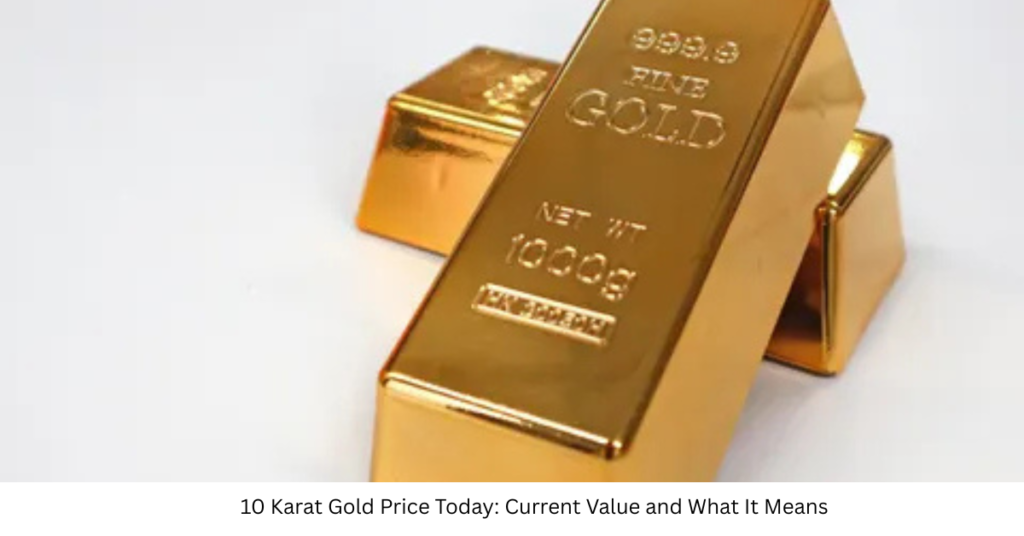

Gold prices can move noticeably from one day to the next, which makes it important to understand what you are actually paying for when shopping for a 10K ring, chain, bracelet, or other jewelry. The 10 karat gold price today is based largely on the international price of pure gold, but the final price of a jewelry item can be much higher because of labor, design, retailer margins, and other costs.
As of August 12, 2026, recent market pricing has placed spot gold in the roughly $4,300–$4,400 per troy ounce area, although the exact price changes throughout the trading day. Using approximately $4,370 per ounce as an illustrative reference, 10K gold has a theoretical metal value of about $58.60 per gram, before dealer margins, manufacturing costs, taxes, and other premiums.
What Is 10K Gold?
10K gold means that 10 parts out of 24 are pure gold. That works out to approximately 41.7% pure gold, with the remaining 58.3% made up of alloy metals such as silver, copper, zinc, or other materials.
The World Gold Council lists .417 as the standard fineness associated with 10-karat gold.
This is why a 10K piece is considerably less expensive than an equivalent-weight piece made from 18K or 22K gold.
10K Gold Purity Compared With Other Karats
| Gold Type | Gold Purity |
|---|---|
| 10K | 41.7% |
| 14K | 58.3% |
| 18K | 75.0% |
| 22K | 91.7% |
| 24K | Approximately 99.9% |
The lower gold content is not necessarily a disadvantage. In fact, the additional alloy metals make 10K gold harder and generally more suitable for jewelry that receives frequent everyday wear.
10 Karat Gold Price Today Per Gram
The easiest way to estimate the raw value of 10K gold is to start with the price of pure 24K gold and multiply it by the 10K purity factor.
The basic calculation is:
10K gold value = 24K gold price × 0.417
For example, if spot gold is approximately $4,370 per troy ounce:
- Pure gold per gram: about $140.50
- 10K purity: 41.7%
- Estimated 10K metal value: about $58.60 per gram
- Estimated 10K metal value per 10 grams: about $586
- Estimated 10K metal value per troy ounce: about $1,821
These figures represent the theoretical precious-metal value, not necessarily the amount a jeweler will charge or a gold buyer will pay.
Gold prices are quoted internationally by troy ounce, while jewelry is commonly weighed in grams. The World Gold Council notes that gold reference prices are generally quoted per troy ounce unless otherwise stated.
Why the 10K Gold Price Changes Every Day
The value of 10K gold does not have a completely independent market price. It follows the underlying price of gold, which can move throughout the day.
Several factors can influence gold prices, including:
- Interest-rate expectations
- Inflation
- The strength of the U.S. dollar
- Central-bank gold purchases
- Geopolitical uncertainty
- Investor demand for safe-haven assets
- Physical jewelry demand
- Gold futures and investment flows
The gold market has experienced significant volatility in 2026. The London Bullion Market Association reported that gold reached a record $5,501.70 per ounce on January 29, 2026, before falling sharply and ending June at $4,026.05.
That kind of movement explains why a price quoted for a piece of jewelry today may not be identical to a price quoted a few weeks later.
How to Calculate the Value of 10K Gold
If you already own a 10K gold item and want to estimate its raw gold value, you can do the calculation yourself.
Step 1: Find the item’s weight
Suppose your bracelet weighs 20 grams.
Step 2: Determine the purity
10K gold is approximately 41.7% pure gold.
20 grams × 0.417 = 8.34 grams of pure gold
Step 3: Multiply by the pure-gold price
Using an illustrative pure-gold price of approximately $140.50 per gram:
8.34 × $140.50 = about $1,172
So the estimated raw gold content would be around $1,172.
However, this does not mean a gold buyer will necessarily offer you $1,172. Refining costs, dealer margins, testing, market conditions, and the buyer’s desired profit can reduce the actual offer. A similar distinction between melt value and the price actually received is important when selling gold.
10K Gold Melt Value vs. Jewelry Price
This is one of the most important things to understand before buying or selling.
Melt value refers to the approximate value of the recoverable gold contained in an item. It does not account for craftsmanship or the retail value of the finished jewelry.
A jewelry store, on the other hand, may charge for:
- Gold content
- Design and craftsmanship
- Manufacturing
- Gemstones or diamonds
- Brand reputation
- Retail overhead
- Shipping
- Taxes
- Dealer markup
For that reason, a $1,000 piece of 10K jewelry does not necessarily contain $1,000 worth of gold.
The opposite can happen when selling. A buyer may pay less than the calculated melt value because they need to cover refining, operating costs, and their own margin.
Is 10K Gold Good Quality?
Yes. The answer depends on what you want from your jewelry.
10K gold contains less precious metal than higher-karat gold, but that lower gold percentage also means it contains more strengthening alloys. This generally makes it a practical choice for everyday jewelry.
Advantages of 10K Gold
- More affordable: It costs less than comparable higher-karat gold.
- Durable: The alloy composition makes it relatively hard and resistant to everyday wear.
- Good for everyday jewelry: It is commonly suitable for rings, bracelets, necklaces, and other frequently worn pieces.
- Available in different colors: Yellow, white, and rose gold can all be produced using different alloy combinations.
Potential Disadvantages
The main trade-off is purity. A 10K item contains only about 41.7% gold, so someone looking for a richer gold composition may prefer 14K, 18K, or 22K.
Some people may also experience skin irritation from particular alloy metals used in jewelry. The exact composition can vary, especially with white gold.
10K vs. 14K Gold: Which Is Better?
There isn’t one universal winner.
If your priority is durability and affordability, 10K can make a lot of sense. If you want a higher percentage of gold and a richer appearance while still retaining good durability, 14K is often an attractive middle ground.
Consider these differences:
10K gold
- 41.7% gold
- Generally more affordable
- More alloy metals
- Good durability
14K gold
- 58.3% gold
- Higher intrinsic gold value
- Richer gold content
- Still highly suitable for everyday jewelry
The right choice ultimately depends on your budget, intended use, appearance preferences, and how important gold purity is to you.
Does 10K Gold Tarnish?
Pure gold does not readily tarnish, but 10K gold is not pure gold. Because more than half of its composition consists of other metals, those alloys can react with moisture, chemicals, cosmetics, and environmental conditions.
This means 10K jewelry can sometimes develop discoloration or lose some of its original shine.
Simple care can help:
- Remove jewelry before swimming or using harsh chemicals.
- Avoid prolonged exposure to perfumes and cleaning products.
- Store pieces separately to reduce scratching.
- Clean them gently with products suitable for gold jewelry.
- Have valuable pieces professionally inspected when necessary.
What Makes 10K Gold More or Less Valuable?
Weight and purity are the two most important factors when calculating the underlying gold value, but they are not the only considerations.
A 10K ring weighing 15 grams contains considerably more gold than a 10K ring weighing 5 grams. However, two rings with the same weight can have very different retail prices because of their designs, gemstones, brands, and craftsmanship.
When evaluating a piece, look at:
- Karat or fineness mark
- Total weight
- Gold spot price
- Gemstone value
- Brand
- Condition
- Craftsmanship
- Dealer premium
- Potential resale demand
How Much Is a 10K Gold Ring Worth?
There is no single answer because rings vary dramatically in weight and design.
For example, imagine a 10K ring weighs 6 grams and the estimated raw 10K gold value is $58.60 per gram.
6 × $58.60 = approximately $352 of raw gold value
But the retail price could be substantially higher because the buyer is paying for manufacturing, design, retail expenses, and possibly stones.
Likewise, the resale value could be lower than the raw calculation if a buyer offers a discounted percentage of melt value.
Should You Buy 10K Gold at Today’s Price?
That depends on why you are buying it.
If you’re purchasing jewelry for everyday wear and want to keep the price manageable, 10K gold can be a sensible option. If your primary goal is maximizing the amount of gold you own for investment purposes, you may want to compare jewelry with bullion products, because jewelry usually carries additional costs.
Before purchasing, compare at least three things:
- Gold content
- Total price
- Price per gram of actual gold
Don’t assume that the lowest sticker price is automatically the best deal.
Frequently Asked Questions
What is the 10 karat gold price today?
The price depends on the current international gold price and the item’s weight. Using an illustrative gold price of around $4,370 per troy ounce, the theoretical 10K metal value is approximately $58.60 per gram. Actual retail and resale prices can differ considerably.
How much gold is in 10K gold?
10K gold contains approximately 41.7% pure gold. The remaining 58.3% consists of other alloy metals.
Is 10K gold real gold?
Yes. 10K gold is genuine gold. It simply contains a lower percentage of gold than 14K, 18K, 22K, and 24K gold.
Is 10K gold worth buying?
For affordable, durable everyday jewelry, 10K gold can be a very practical choice. However, buyers should compare the jewelry’s total price with its actual gold content rather than judging value from the karat number alone.
How much is 10K gold worth per gram?
Its raw metal value is approximately 41.7% of the price of pure gold per gram. Because the spot price changes constantly, the exact amount changes as well.
Does 10K gold have resale value?
Yes. A 10K item contains real gold and therefore has intrinsic metal value. However, the amount you receive when selling may be below its calculated melt value, depending on the buyer and current market conditions.
Is 10K or 14K gold better?
10K is generally the more affordable and alloy-heavy option, while 14K contains substantially more gold. For everyday jewelry, both can be good choices; the better option depends on your budget and priorities.
Final Thoughts on the 10 Karat Gold Price Today
Understanding the 10 karat gold price today is about more than finding a single number online. The real calculation starts with the current spot price of pure gold, adjusts for 10K’s 41.7% purity, and then considers the weight of the item.
If you’re buying or selling jewelry, remember that the melt value is not the same as the retail or resale price. Take the item’s weight, purity, craftsmanship, dealer premium, and current gold market into account before making a decision.
Gold prices can change quickly, so use the latest spot-market quote when making an actual purchase or sale. For a more accurate valuation, weigh the item, verify its 10K hallmark or purity through a reputable professional, and compare offers from multiple buyers.